What Live Looping Has Taught Me: Simplicity, Tone, and the Art of Building a Song in Real Time
What I've learned over the years playing live with a looping pedal. Tips, tricks, and advice
Baronhead
5/22/20265 min read
There’s something magical about live looping when it finally clicks.
One person. One instrument. One voice. And suddenly the room sounds like an entire band.
But after years of performing with loopers — from solo acoustic gigs to fully electrified “Off the Grid” performances — I’ve learned something important:
The Best Live Loops Are Usually the Simplest Ones
Most people get excited about looping because of what it can do.
Massive layered arrangements. Percussion. Harmonies. Ambient textures. MIDI synchronization. Stereo rigs. Complex signal chains. And that is awesome when you get to that level with consistency.
But what I’ve learned is that the real magic happens when you strip everything down first.
Whether you’re using a Boss RC-500, an Ed Sheeran Looper, or any modern looping setup, the fundamentals matter more than the technology.
And if you can master those fundamentals, looping becomes one of the most creative tools you’ll ever touch.
Start With the Simplest Possible Idea
One of the biggest mistakes newer loopers make is trying to build an entire song immediately.
Too many chords.
Too many layers.
Too much rhythm.
Too much movement.
Instead, think like an old blues player:
“Two chords and the truth.”
Or maybe three, if you’re feeling adventurous.
Some of the strongest loops I’ve ever built started with almost nothing:
A single muted strum
A kick on beat one
One bass note
A simple pulse
The key is creating a strong foundation that feels good before adding complexity.
If your first layer is busy, every additional layer fights for space. But if the first loop is simple and confident, everything else has room to breathe.
Your First Loop Is Everything
In live looping, the first loop is your drummer, your bassist, your click track, and your foundation all at once.
If it rushes, drags, clips, distorts, or feels awkward, the entire performance will feel unstable.
That’s why I always recommend slowing down and really flushing out ideas before you perform them live.
Find the Correct Tempo First
Not close.
Not “good enough.”
The right tempo.
A song can completely change emotionally by moving just a few BPM in either direction.
And in the beginning, avoid built-in drums entirely if possible.
A simple metronome or tap tempo is usually more valuable early on than a giant backing track.
Simplicity Creates Better Loops
When building a loop, ask yourself:
“What’s the minimum amount I need to make this groove work?”
Instead of strumming full chords immediately, maybe start with:
One muted rhythmic note
A bass pulse
A kick pattern
A simple quarter-note groove
A percussive hit on beats 2 and 4
Professional loopers understand arrangement.
They leave space.
That space is what allows vocals, lead guitar, harmonies, and dynamics to shine later.
A cluttered first loop creates sonic traffic jams.
A clean first loop creates a song.
Tone Matters More Than People Think
Looping exposes bad tone immediately.
Every layer compounds what came before it.
So if your guitar tone is muddy, harsh, brittle, overly compressed, or too loud, stacking loops only magnifies the problem.
That’s why I spend a lot of time paying attention to:
EQ
Gain staging
Loop volume
Compression
Amp voicing
Reverb levels
Stereo image
Frequency overlap
The cleaner each individual sound is, the cleaner the entire performance becomes.
And honestly, one of the most overlooked parts of looping is volume discipline.
Not every layer should be the same volume.
In fact, most layers shouldn’t be.
Watch Your Signal Routing
As your looping rig grows, routing becomes incredibly important.
This is especially true if you’re running electric guitar through real amps.
One thing I’ve discovered is that stacking too many instruments into the same amp or speaker can overwhelm the sound quickly.
Especially with guitar amps.
So when possible, separating sounds across different outputs can dramatically improve clarity.
For example:
Guitar loops to one amp
Percussion loops to a PA
Bass parts to a separate channel
Vocals isolated independently
This keeps everything cleaner and more defined.
The moment multiple frequencies start fighting through the same speaker, your beautiful loop can turn into mush.
Learn Your Looper Like It’s an Instrument
This might be the most important advice in the entire article.
Your looper is not just a pedal.
It’s an instrument.
And just like guitar players obsess over scales, chord voicings, and phrasing, loopers need to obsess over workflow.
Learn every button.
Learn every menu.
Learn every shortcut.
Read the manual constantly.
Seriously.
Read it in bed.
Read it on the couch.
Read it in the bathroom.
The players who truly master looping are usually the ones who deeply understand their tools.
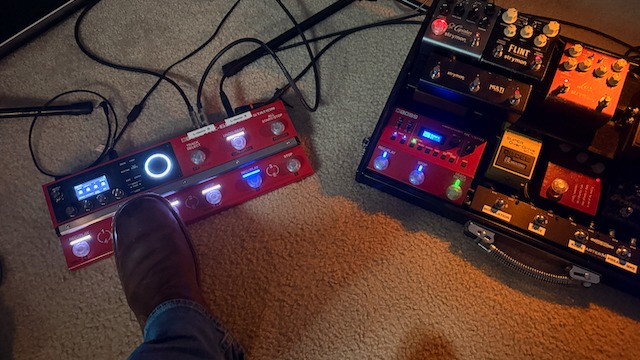
I use the Boss RC-500 extensively because it strikes a fantastic balance between live usability and deeper functionality.
But regardless of the looper you choose, you need muscle memory.
You should know:
How to recover from mistakes
How to stop loops cleanly
How to fade tracks
How to assign functions
How to sync tempos
How to manage memory banks
How to route outputs
How to adjust quantization
How to control dynamics live
Because during performance, there’s no time to think.
External Footswitches and MIDI Are Game Changers
One of the smartest upgrades you can make is adding external control.
For example, using something like a Boss FS-series footswitch for tap tempo frees up your main onboard buttons for actual performance control.
That alone can dramatically improve workflow.
And once you enter the world of MIDI, everything changes.
Suddenly you can:
Change presets automatically
Sync delays and modulation
Control multiple devices at once
Trigger scenes
Manage entire performances from one controller
Looping can evolve from a pedal into a full production environment.
But again — don’t start there.
Master simplicity first.
Then expand.
My Thoughts on the Ed Sheeran Looper
I’ve tested a lot of loopers over the years, including the newer Ed Sheeran Looper.
And honestly? See my Video below
I think it works incredibly well for acoustic players and DI-based setups.
But for electric guitar through real amps, I personally wasn’t impressed with the sound quality.
There’s something happening digitally that feels optimized for acoustic performance rather than live amplified electric guitar.
That doesn’t mean it’s bad.
It just means different tools excel in different environments.
For singer-songwriters running direct acoustic rigs, it’s fantastic.
For electric guitarists building layered amp-based performances, I still strongly prefer other options.
Advanced Songwriting and Multi-Output Systems
If you really want to push looping into production territory — especially for songwriting and arrangement experimentation — routing tools become extremely valuable.
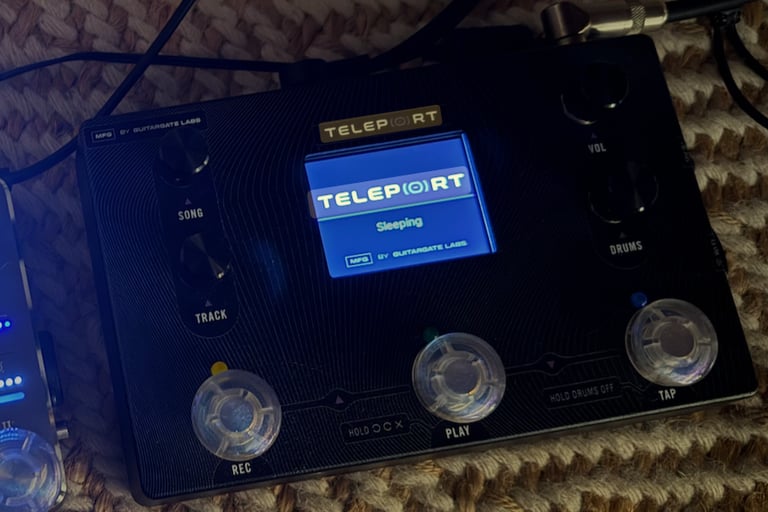
One piece of gear I highly recommend checking out is the Teleport by Guitar Gate.
It opens up powerful possibilities for:
Multi-output routing
Signal management
Re-amping workflows
Creative song development
Separating layered textures cleanly
I plan to do more videos diving into that setup because it unlocks an entirely different level of loop-based creativity.
The Biggest Lesson of All
After years of performing with looping systems, here’s the truth I keep coming back to:
The audience doesn’t care how complicated your rig is.
They care how it feels.
A simple groove played confidently will always beat a complicated loop performed nervously.
Great looping isn’t about proving how many layers you can stack.
It’s about creating emotion, movement, tension, release, groove, and atmosphere in real time.
And ironically, the more advanced you become, the simpler your playing often gets.
Because you stop trying to impress people with technology…
…and start using technology to serve the song.
That’s where the magic happens.